The Unified Decentralized PaaS for Cloud, Storage, and Audio
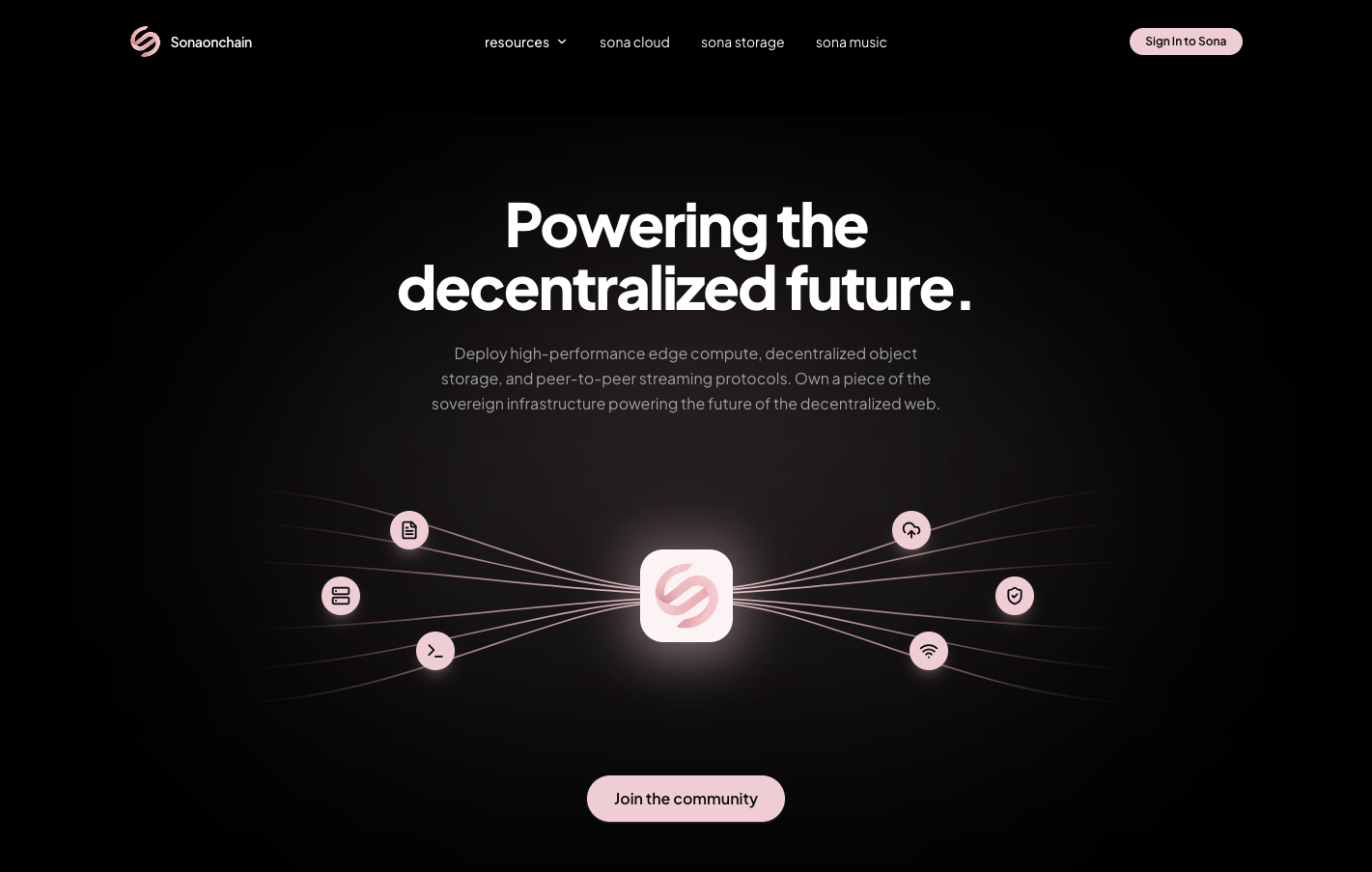
A decentralized developer platform uniting three specialized engines: SonaCloud for serverless compute, SonaStorage for persistent object storage, and SonaMusic for zero-egress audio streaming.
Overview
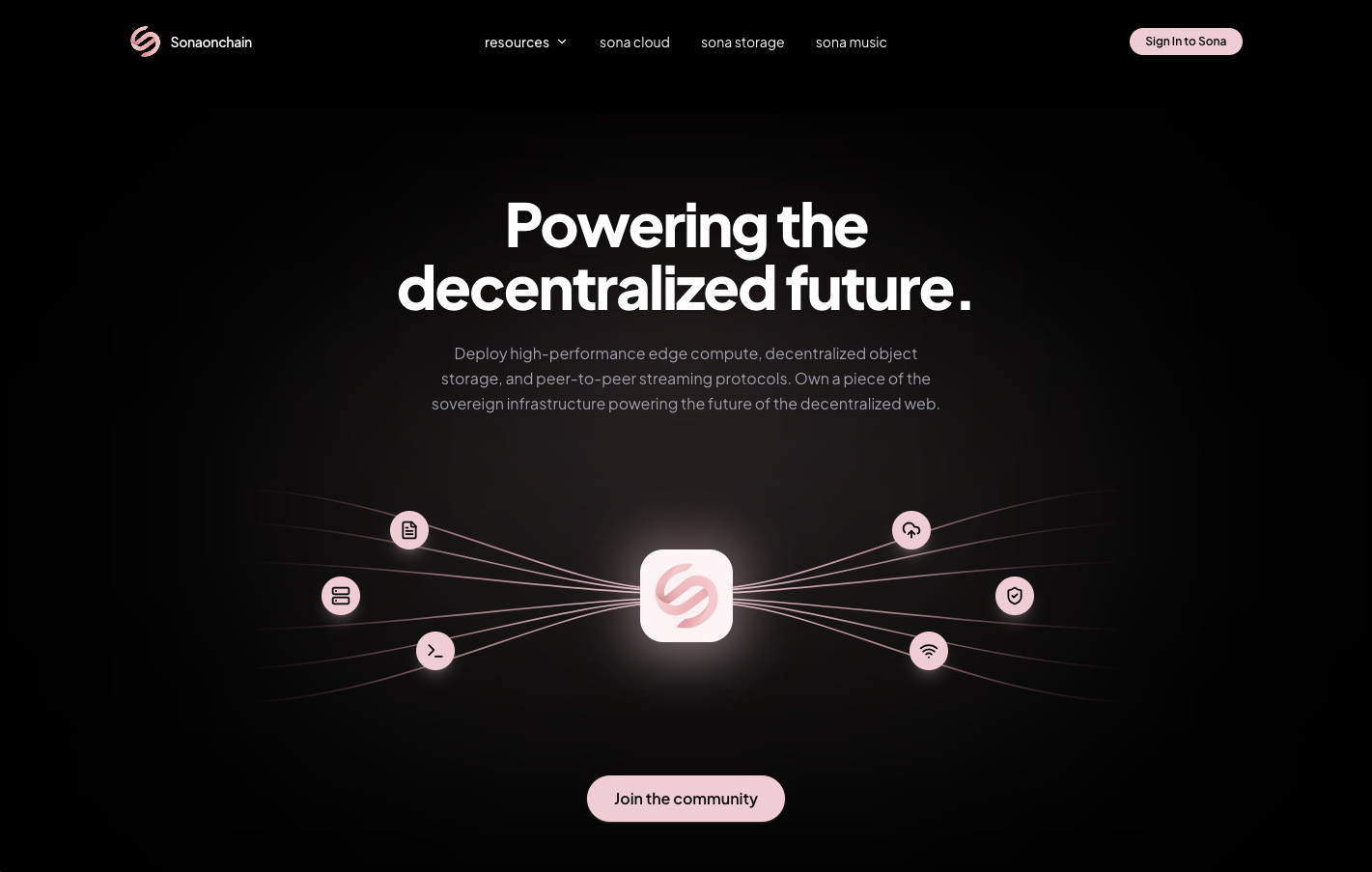
Sonaonchain is a decentralized PaaS that coordinates compute, storage, and audio streaming into one developer platform. Instead of managing separate providers for compute, archival storage, and media delivery, Sonaonchain separates workloads into three modular engines: SonaCloud (serverless Wasm compute on K3s), SonaStorage (persistent object storage backed by IPFS), and SonaMusic (two-tier audio streaming with Postgres catalog routing). Independent node operators select their service tier based on available hardware.
SonaCloud (Compute Engine)
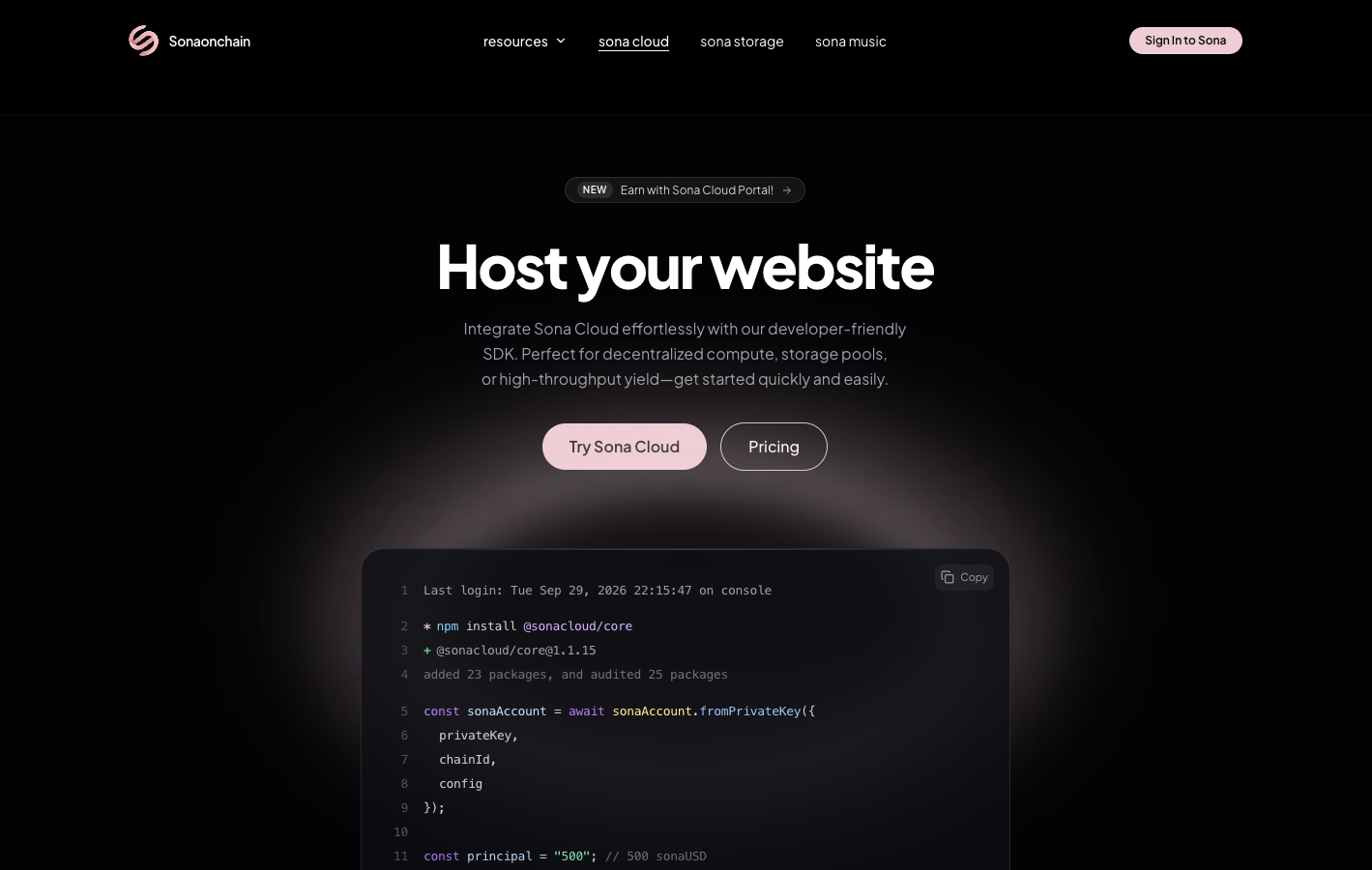
Git-push deployments running on K3s runwasi nodes with lightweight WasmEdge sandboxes.
SonaStorage (Storage Engine)
Persistent object storage backed by local NVMe block pools and decentralized IPFS replication.
SonaMusic (Audio Engine)
Delivery nodes running Postgres catalog APIs mapped to IPFS transcoding content nodes.
Tri-Service Creator Nodes
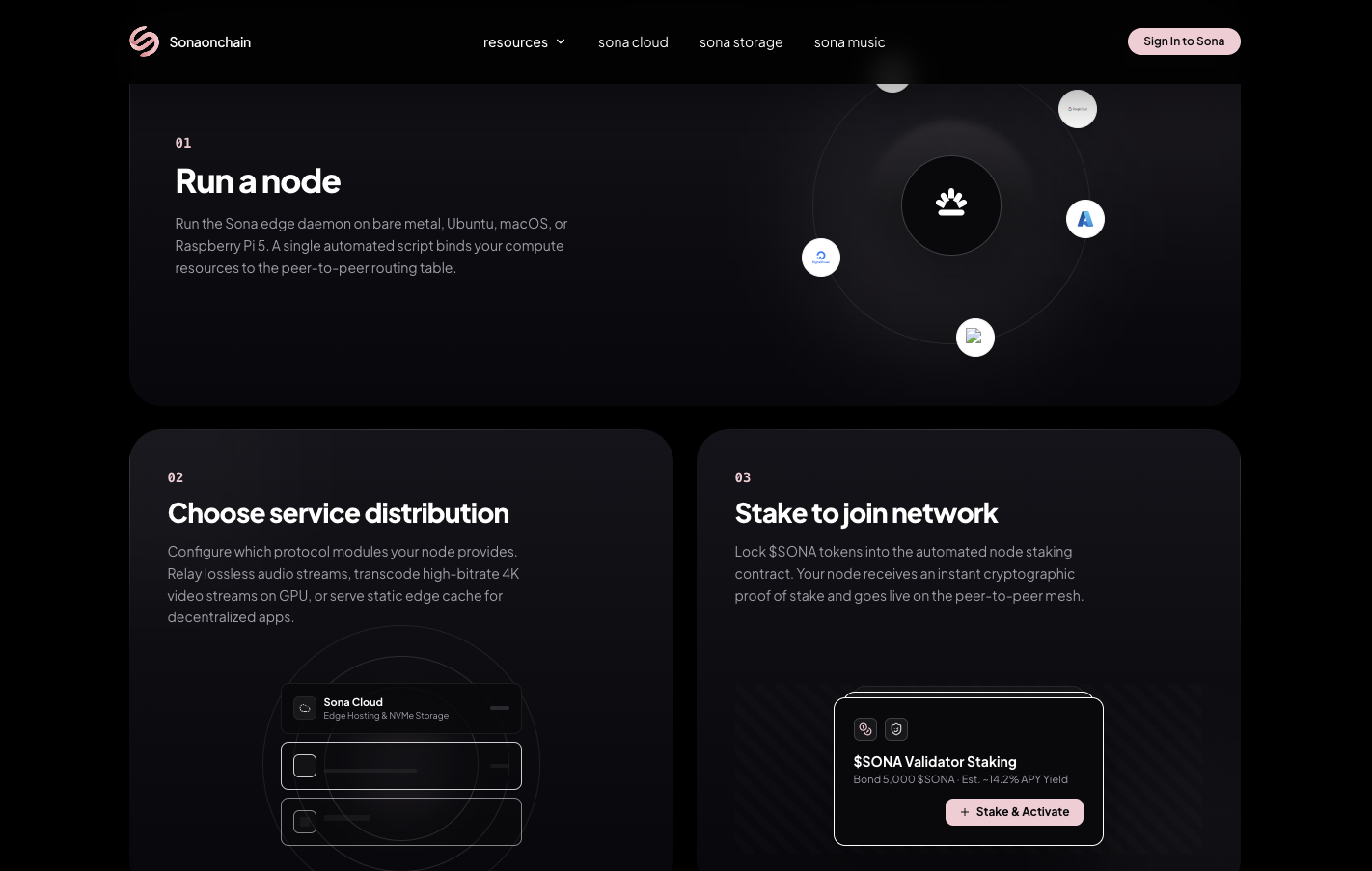
Operators choose whether to run Cloud, Storage, or Music workloads based on machine specs.
The challenge
Building modern Web3 applications usually requires stitching together multiple fragmented protocols: container compute networks, archival blockweaves, and media-specific streaming platforms. Each introduces separate tokens, distinct wallet requirements, and divergent APIs. In addition, existing decentralized hosting suffers from slow cold starts and volatile public IPFS gateways, while centralized streaming incurs heavy egress bandwidth fees.
Architecture & Strategy
I designed Sonaonchain as a unified platform architecture split into three purpose-built engines: SonaCloud for compute, SonaStorage for object storage, and SonaMusic for audio delivery.
Engineered capabilities
SonaCloud Serverless Compute
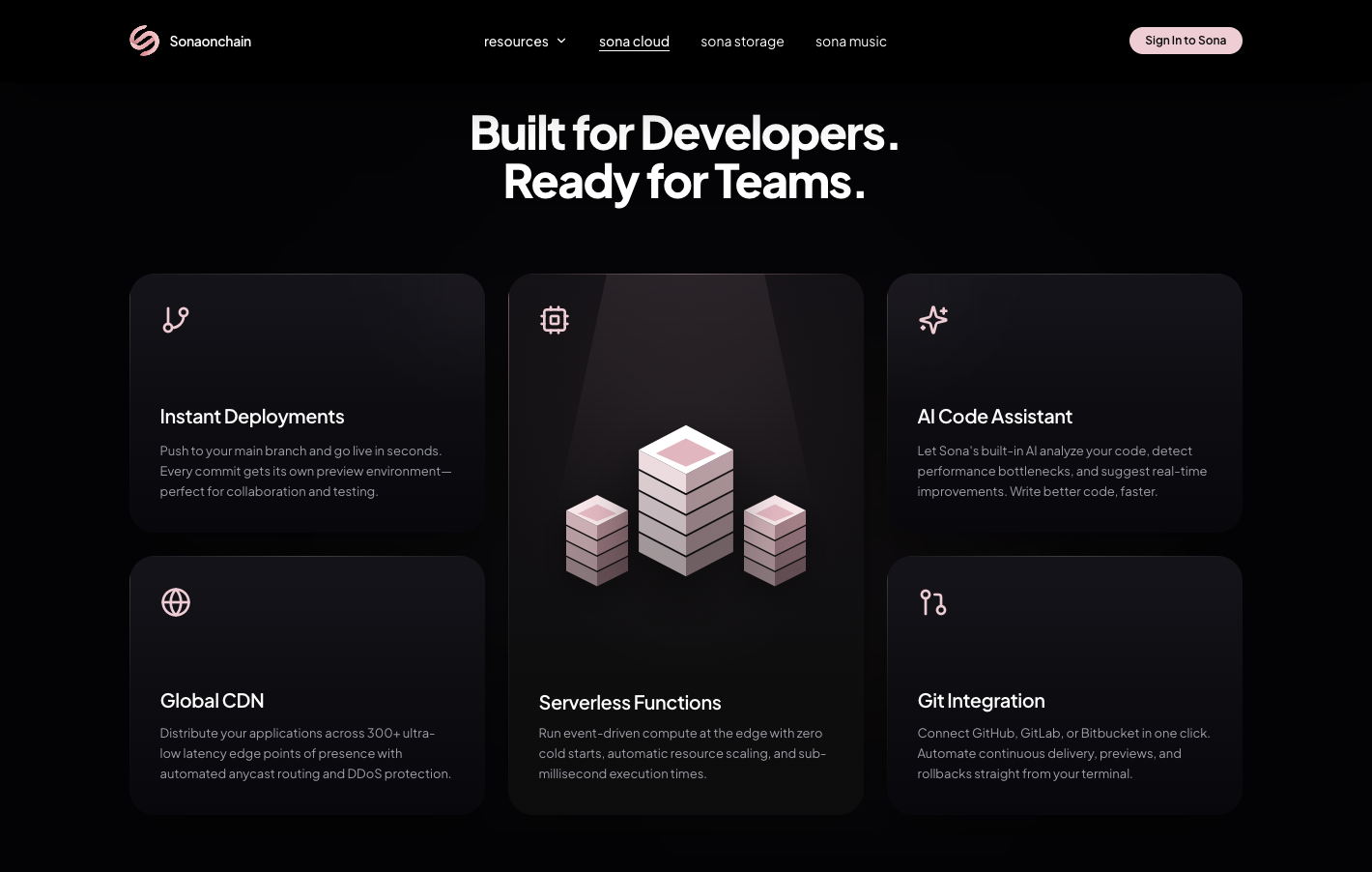
Sub-10ms cold starts running WasmEdge modules on lightweight K3s clusters.
SonaStorage Object Engine
Persistent object storage with local disk caching, IPFS replication, and zero egress fees.
Open Stem Studio
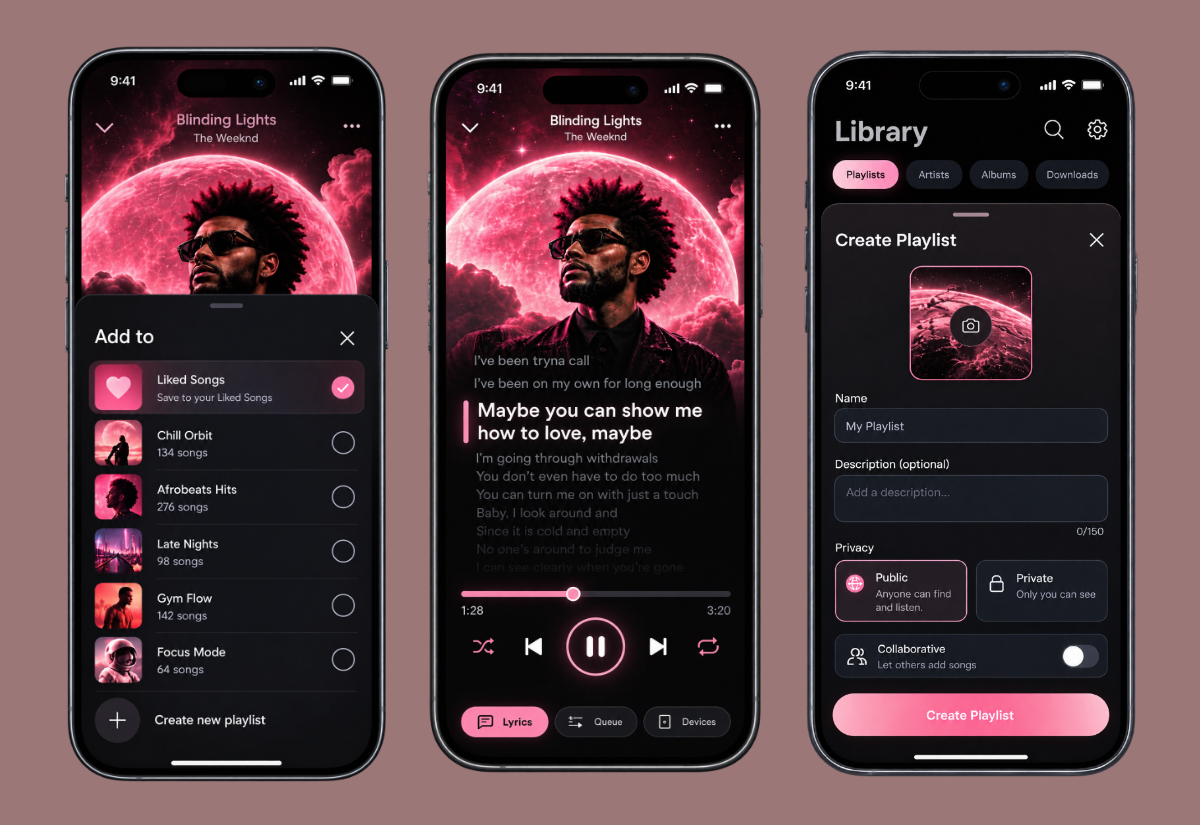
Client-side audio processing allowing listeners and creators to isolate vocal, drum, and bass stems.
Proof of Availability
Smart contract staking and automated verification to guarantee node uptime and data integrity.
Global Anycast Edge
Edge routing layer proxying requests to the nearest verified healthy node.
Technical benchmarks
Web3 infrastructure typically relies on single-purpose networks: compute marketplaces offer container instances, blockweaves offer cold archival storage, and music protocols handle streaming only. Teams building media or consumer applications often end up managing multiple vendor tokens, inconsistent APIs, and distinct operational agents.
Sonaonchain consolidates these functions into one platform with three specialized operational engines−SonaCloud, SonaStorage, and SonaMusic−governed by a shared on-chain registry. Independent node operators select the specific workload that matches their hardware configuration.
Multi-Service Competitive Matrix: Feature Availability
| Capability & Feature | Sonaonchain | Audius | Arweave | Akash |
|---|---|---|---|---|
| All-in-One PaaS (Cloud + Storage + Audio) | − | − | − | |
| Serverless Compute (App Deployments) | − | − | ||
| Persistent Object Storage | − | − | − | |
| Local Block Storage + IPFS Pinning | − | − | − | |
| Decentralized Audio Distribution Protocol | − | − | ||
| Tiered Audio Streaming (Delivery & Content Nodes) | − | − | ||
| Direct Creator Tipping (100% to Artist) | − | − | − | |
| Tri-Service Node Workload Selection | − | − | − | |
| Git-Push Developer Deployment Workflow | − | − | − | |
| Cryptographic Proof of Availability | − | − | ||
| Zero Egress Bandwidth Fees ($0 / GB) | − | − |
Architectural Overview: Three Specialized Engines
Sonaonchain decouples compute, storage, and audio into three distinct engines rather than running a monolithic node daemon.
1. SonaCloud: Serverless Wasm Execution
SonaCloud handles web application hosting, backend microservices, and edge APIs.
- Developer Workflow (
git push): Developers trigger deployments by runninggit push. - Build Engine: Compiles code into standalone WebAssembly (Wasm) modules, generates a deterministic release manifest, and publishes the signed artifact hash.
- Orchestration & Edge: An edge routing layer directs incoming user requests to healthy Content Nodes closest to the client.
- Execution Nodes: Content Nodes run K3s clusters with
runwasiintegration to invoke isolated WasmEdge sandboxes directly, achieving cold starts under 8ms with an idle memory footprint under 48MB. - Availability Proofs: Node client agents submit periodic proofs to on-chain contracts to confirm execution SLA compliance.
2. SonaStorage: Persistent Object Storage
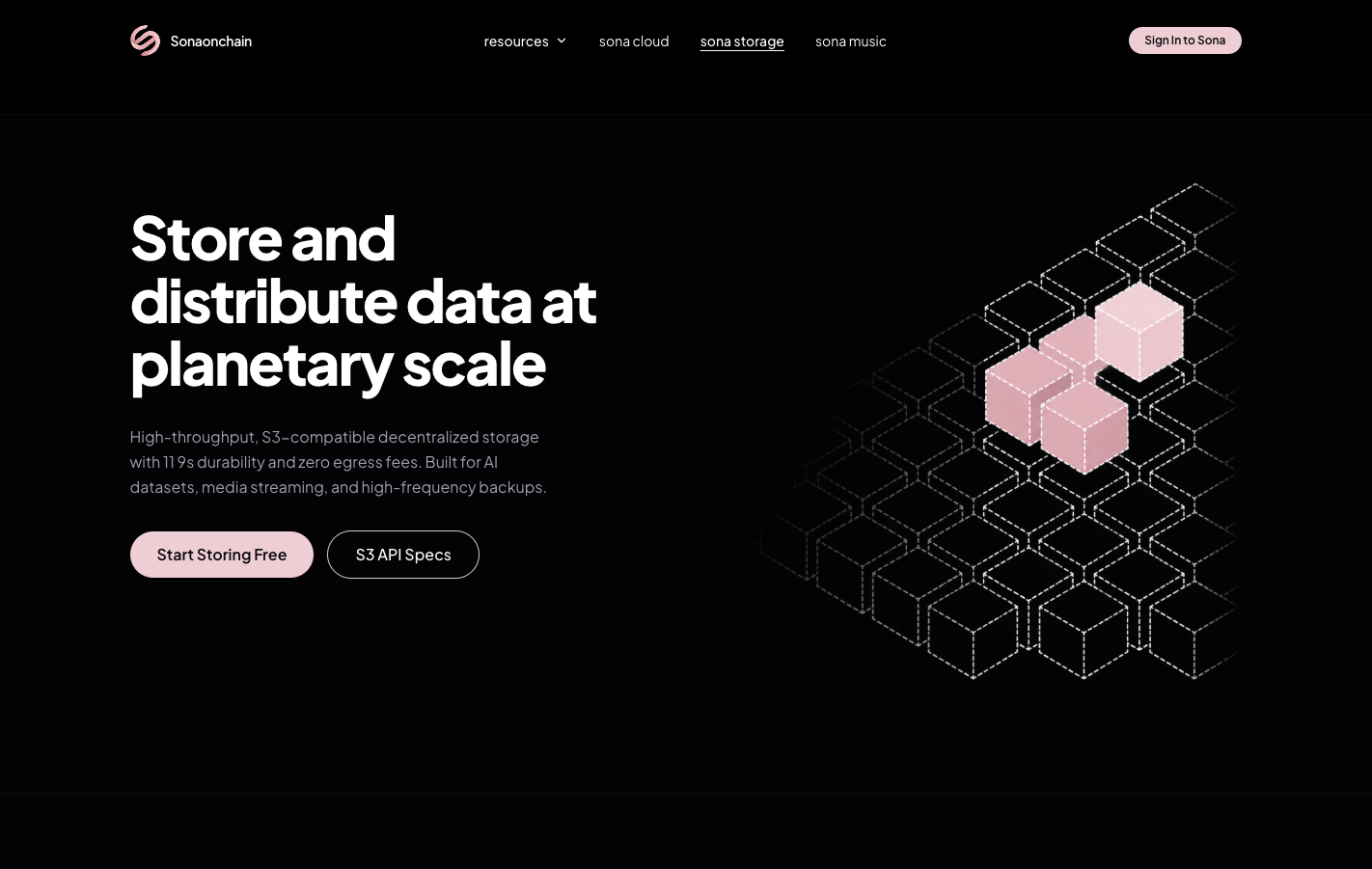
SonaStorage provides persistent blob and asset hosting with zero egress fees, eliminating reliance on slow public IPFS gateways.
- Developer Workflow: Developers upload objects through standard object-storage SDKs, a dedicated CLI, or the web console.
- Object Storage Nodes: Dedicated storage nodes ingest binary assets, write them to local NVMe block storage pools for fast retrieval, and register immutable content hashes.
- IPFS Peer Replication: Data chunks are pinned across distributed storage nodes running IPFS, ensuring geographical redundancy and tamper-proof verification.
- Local Read Caching: Requests are resolved from local storage pools on nearby nodes, maintaining sub-20ms read latency.
- Zero Egress Billing: Data is served directly from peer nodes without public gateway hops or egress bandwidth charges.
3. SonaMusic: Two-Tier Audio Streaming
SonaMusic is a decentralized audio streaming protocol designed to distribute music without high cloud CDN costs. Audio distribution is coordinated over IPFS without using WebRTC.
- Creator Workflow: Artists upload master audio tracks and stems through the web studio, mobile app, or CLI.
- Content Nodes (Transcoding & Storage):
- Ingest raw audio files and perform multi-bitrate transcoding and stem separation.
- Store and pin audio chunks into local IPFS nodes, generating content-addressed CIDs.
- Publish track metadata along with the IPFS CID mappings to the Delivery Node network.
- Delivery Nodes (PostgreSQL & Catalog API):
- Run PostgreSQL databases and the Sona Catalog API.
- Index track metadata, artist profiles, playlists, and their corresponding IPFS hash mappings.
- When a user streams a song, the Delivery Node queries the catalog map, locates the Content Node serving the target IPFS chunks, and delivers low-latency audio to the client.
- Open Stem Studio: Allows listeners to isolate vocal, drum, and instrumental stems directly on client devices for custom listening and remixing.
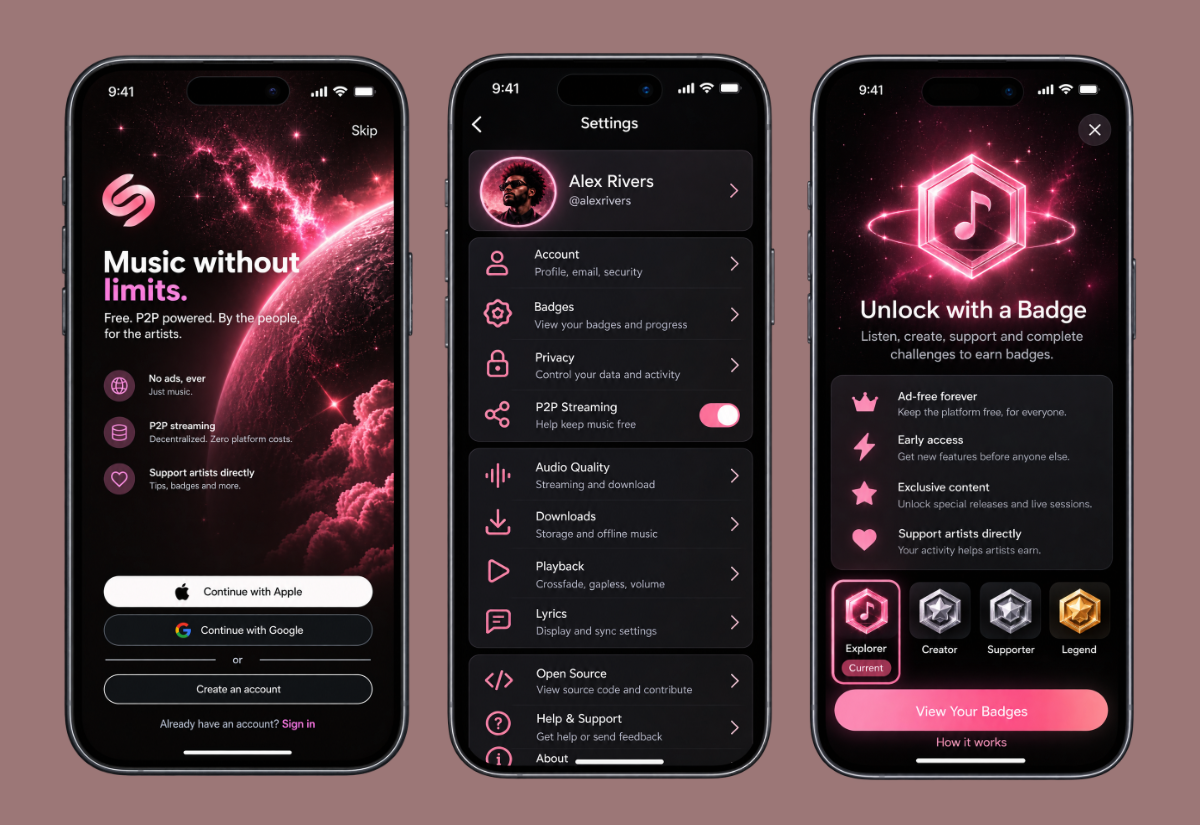
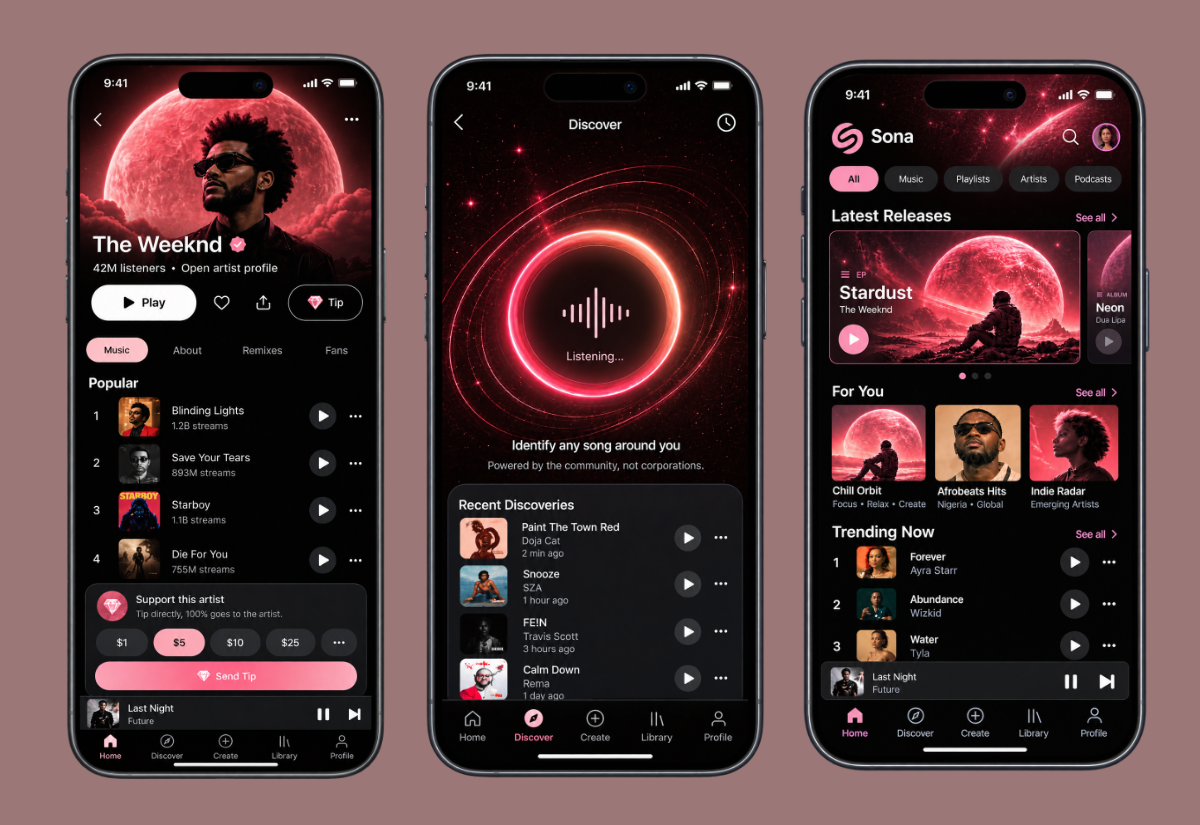
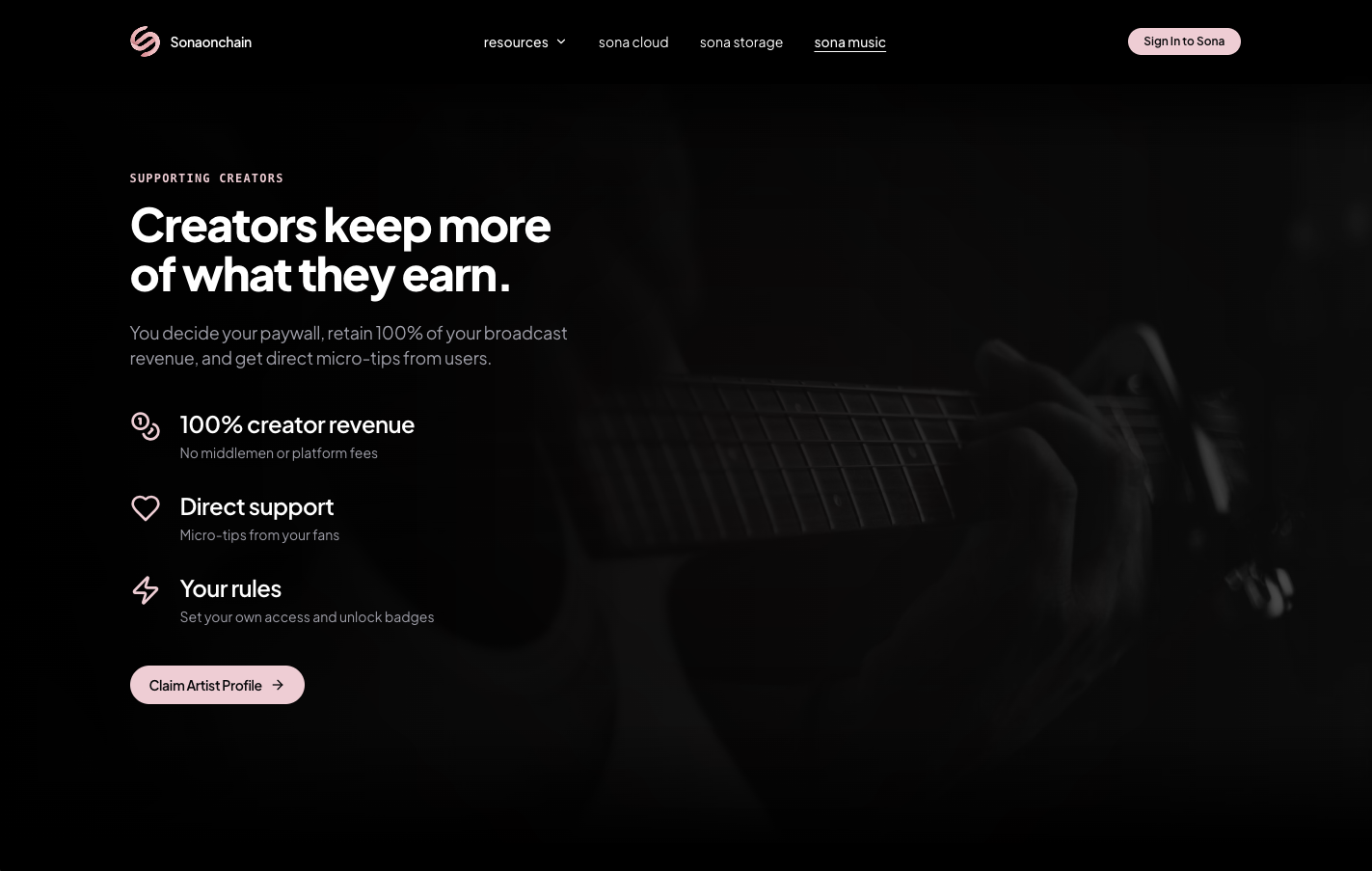
- Direct Tipping: Non-custodial smart contracts enable micro-tips directly from fans to artists without intermediary platform fees.
4. Tri-Service Node Workload Model
Node operators choose the operational profile matching their hardware specifications:
| Service Tier | Hardware Profile | Workload | Compensation Model |
|---|---|---|---|
SonaCloud |
Multi-core CPU / High RAM | WasmEdge microservices, serverless APIs | Compute-cycle execution settlements |
SonaStorage |
High-capacity NVMe / SSD arrays | Object storage daemon, local disk caching, IPFS pinning | Storage capacity & retrieval proofs |
SonaMusic |
High network bandwidth / fast disk | Delivery Nodes (Postgres + Catalog) or Content Nodes (Transcoding + IPFS) | Audio delivery proofs & tip relays |
5. Multi-Client Ecosystem
The platform exposes unified APIs consumed by native cross-platform clients:
- Web Dashboard (React / TypeScript): Unified console for managing cloud deployments, storage buckets, and audio streaming metrics.
- Mobile Applications (iOS Swift / Android Kotlin): Native client apps featuring hardware-accelerated audio playback, catalog browsing, and offline stem isolation.
- Node Daemon (Go): Cross-compiled daemon allowing operators to deploy nodes across bare-metal machines, cloud VMs, or home lab servers with Helm and Docker configurations.
Measurable outcomes
Product gallery
Future iterations
Shipping the node operator CLI, adding GPU support to SonaCloud sandboxes, and rolling out mobile stem remixing tools.
Superno
Cloud hosting with zero-egress economics, edge functions, serverless compute, custom domain email inboxes, Anycast edge routing, and native Naira payment rails.